Two billion Muslim consumers, and value earned far from home
The global Muslim market is large, young and growing. Its food supply is still largely shaped elsewhere.
The Muslim Gap
The world’s largest faith-based food and beverage market imports most of its halal goods from outside the Muslim world.
Today: Muslim demand, value created elsewhere
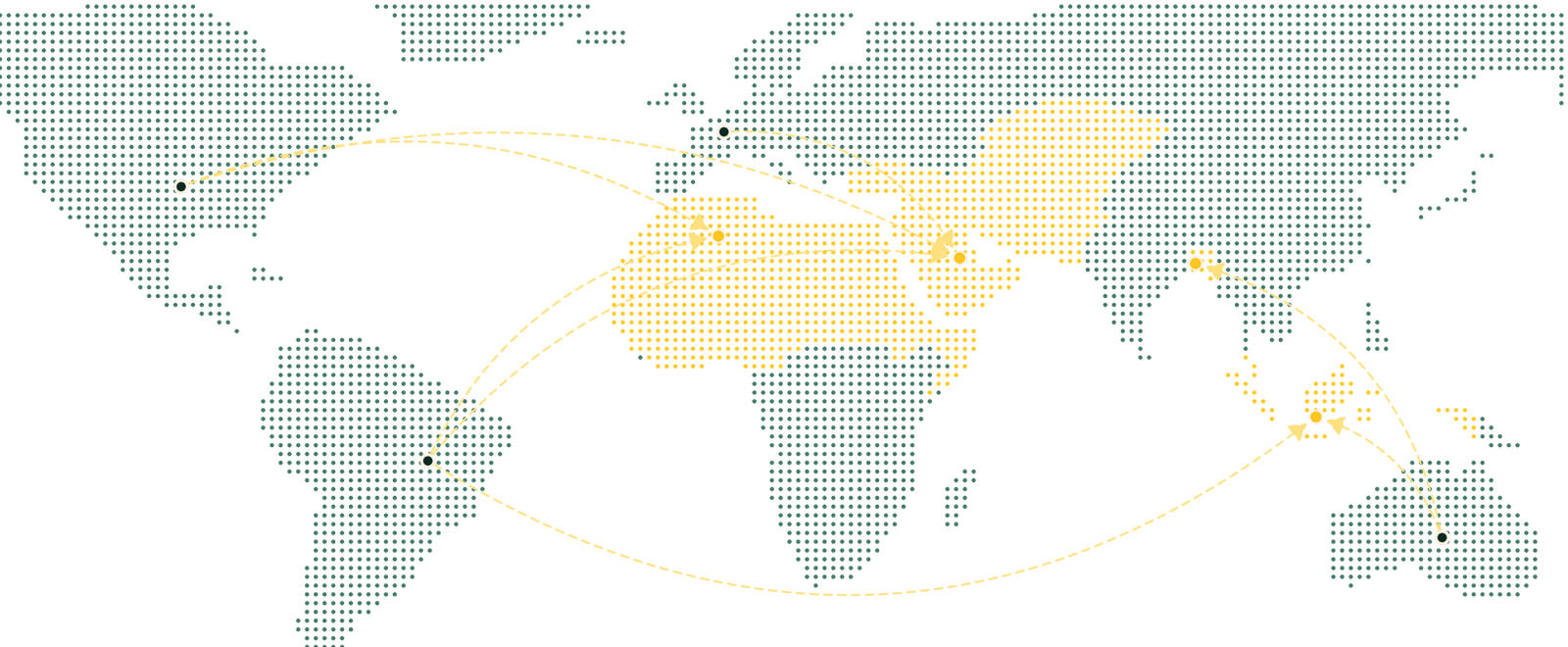 United StatesEuropeBrazilAustraliaMENAThe GulfBangladeshIndonesia
The demand is Muslim. Most of what it imports is grown, processed and branded elsewhere.
Sources: DinarStandard, State of the Global Islamic Economy 2025/26; ICDT, OIC Halal Economy Report. Map is illustrative.
The size of the global Muslim market
Muslim food and beverage spending (US$ trillion)
Indonesia and Bangladesh are the world’s two largest Muslim food markets. They are where we begin.
Sources: Pew Research Center; DinarStandard, State of the Global Islamic Economy 2025/26.
Muslims trading with Muslims: the Silk Road, re-created
The Muslim Gap shows demand inside the Muslim world and value outside it. Cafilas redirects that trade: Muslim farmers, women’s cooperatives and manufacturers supplying Muslim families, so the value stays within the Ummah.
The new ecosystem: grown, made and traded within the Ummah
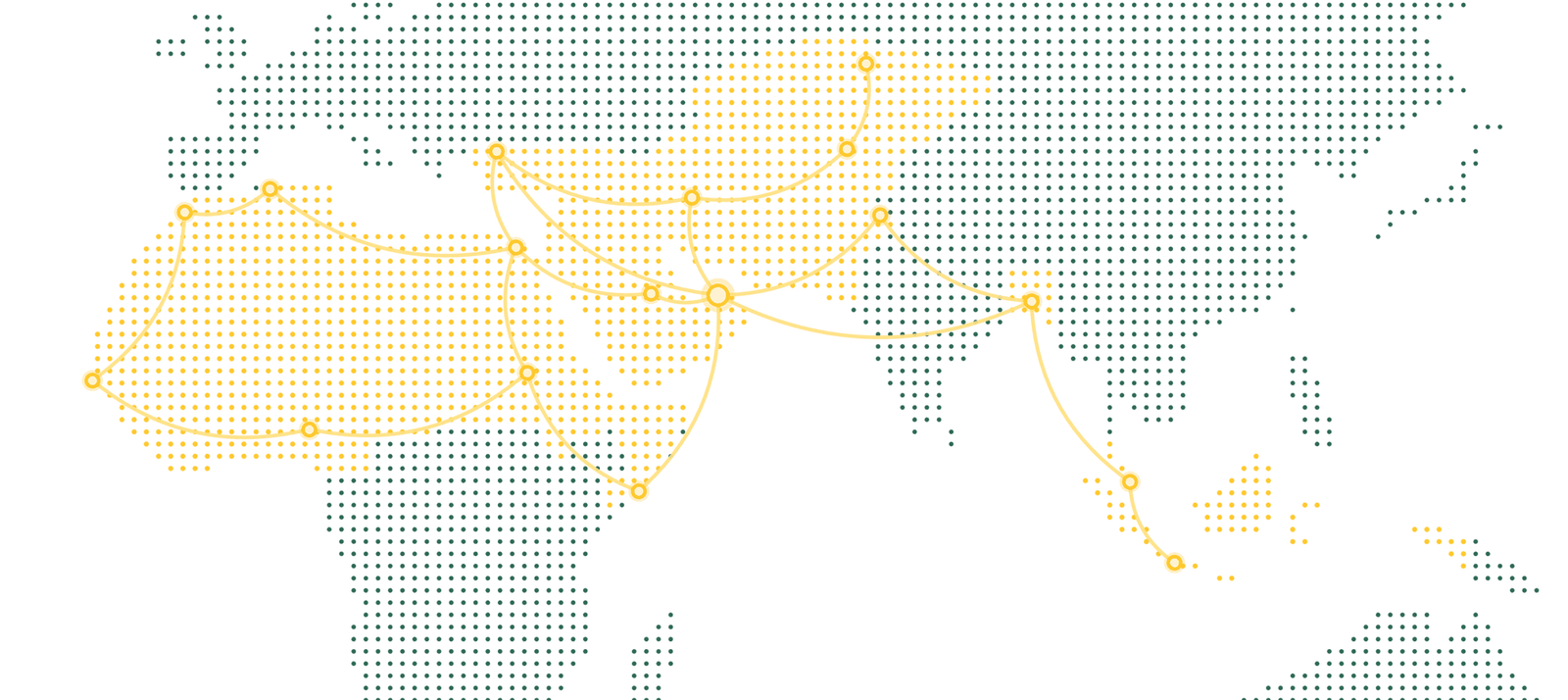
Where we serve
South Asia
Bangladesh today; Pakistan and India next.
South-East Asia
Indonesia today; Malaysia and Brunei to follow.
Middle East, North Africa and the Gulf
Led from our head office in Abu Dhabi.
Africa
West Africa, building on long-standing regional networks.
The global Ummah
Muslim communities in Europe and beyond.
OIC member states
57
From value leaving the Muslim world to value kept within it: the Modern Muslim Silk Road.